
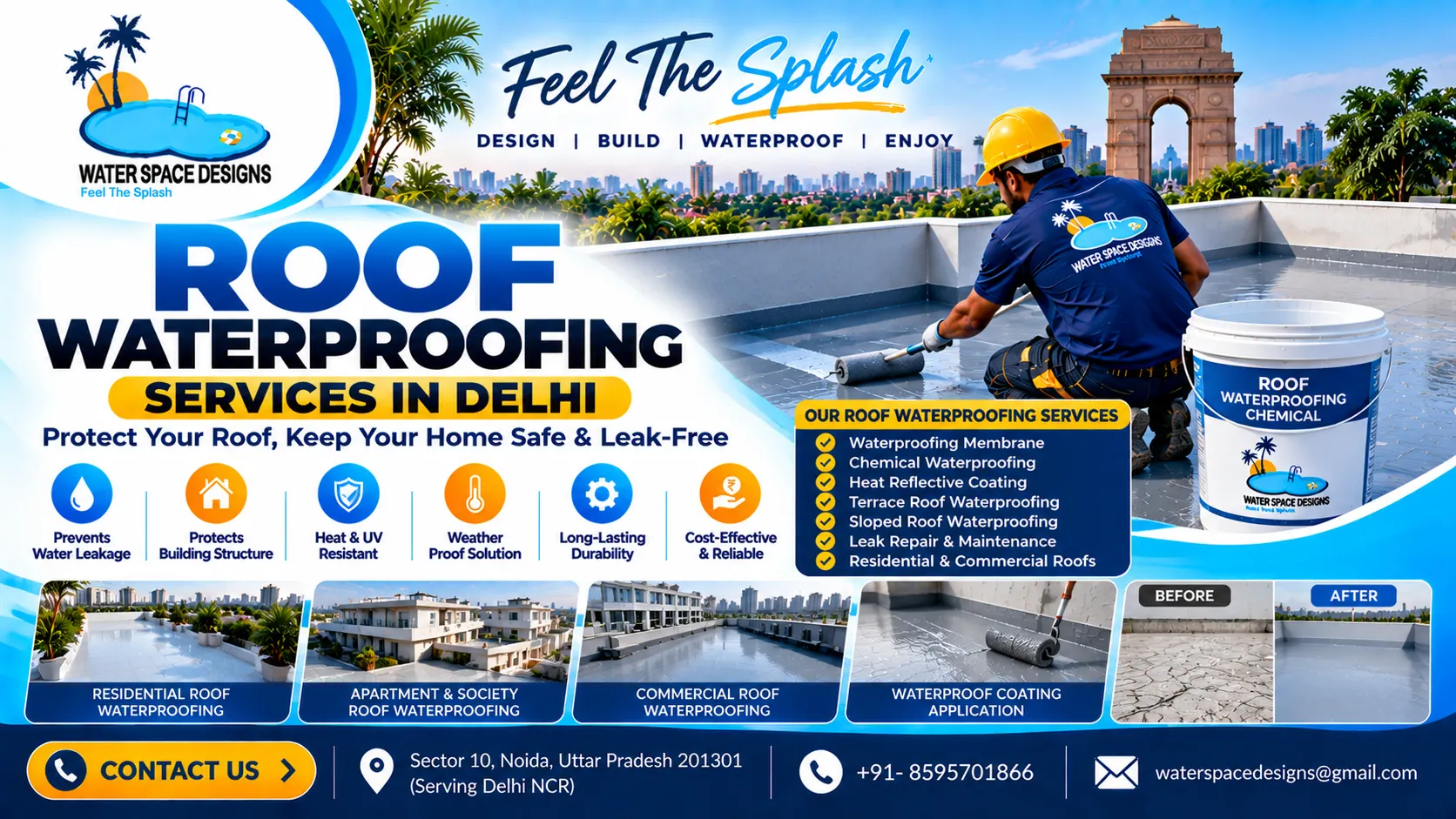
Looking for reliable Roof Waterproofing Services in Delhi to protect your property from rainwater leakage, seepage, dampness and roof deterioration? Water Space Designs provides professional roof waterproofing solutions for residential, commercial, industrial and institutional properties across Delhi.
Delhi roofs are exposed to intense summer heat, ultraviolet radiation, seasonal rainfall and temperature fluctuations. Over time, cracks, damaged waterproofing layers, poor drainage, open joints and water ponding can create pathways for moisture to enter the building.
Professional roof waterproofing should therefore begin with identifying the cause of leakage and assessing the existing roof condition. The waterproofing system should then be selected according to the substrate, exposure, movement, drainage and project requirements.
Professional Roof Waterproofing Services in Delhi
Water Space Designs provides roof waterproofing solutions for different types of buildings and roof surfaces.
Our services can include:
- RCC roof waterproofing
- Flat roof waterproofing
- Terrace roof waterproofing
- Roof leakage treatment
- Roof seepage treatment
- Crack treatment
- Joint waterproofing
- Chemical waterproofing
- PU waterproofing
- Membrane waterproofing
- APP membrane waterproofing
- Polymer-based waterproofing
- Roof drainage improvement
- Pipe penetration treatment
- Parapet-wall waterproofing
- Old roof waterproofing
- New construction roof waterproofing
- Roof waterproofing repair and renovation
The correct waterproofing system depends on the actual roof condition and the source of water ingress.
Why Roof Waterproofing Is Important in Delhi
A roof is one of the most exposed parts of a building.
Rainwater entering through cracks or failed waterproofing can gradually result in:
- Ceiling dampness
- Peeling paint
- Plaster deterioration
- Wall seepage
- Mould growth
- Damp smell
- Rusting of reinforcement
- Damage to false ceilings
- Electrical concerns
- Deterioration of interior finishes
Current Delhi waterproofing service providers commonly identify roof and terrace leakage, cracks, ponding and drainage problems as key waterproofing concerns.
Timely inspection can help identify the source before the problem becomes more extensive.
Roof Leakage Repair in Delhi
Roof leakage may become visible as soon as it rains, but the water-entry point is not always directly above the visible ceiling stain.
Water can travel through:
- Concrete
- Cracks
- Construction joints
- Pipe penetrations
- Parapet junctions
- Roof layers
- Drainage points
For this reason, simply sealing the visible damp area may not permanently address the problem.
A proper roof leakage assessment should investigate the likely water path before selecting the repair method.
RCC Roof Waterproofing in Delhi
RCC roofs are widely used in residential and commercial buildings.
Over time, RCC roofs can develop:
- Hairline cracks
- Shrinkage cracks
- Thermal movement
- Construction-joint leakage
- Surface deterioration
- Drainage problems
- Failed previous waterproofing
RCC roof waterproofing may involve surface preparation, crack treatment, joint detailing, waterproofing application, protective treatment and testing.
The actual method should be selected according to the condition of the existing RCC slab.
Flat Roof Waterproofing
Flat roofs require particular attention to drainage because rainwater can remain on the surface if the slope or drainage system is inadequate.
Flat roof waterproofing should consider:
- Roof slope
- Drain outlets
- Water ponding
- Existing surface
- Expansion or movement joints
- Parapet junctions
- Pipe penetrations
- Existing waterproofing layers
A waterproofing system and drainage system should work together.
Roof Waterproofing for Old Buildings
Older buildings often have multiple layers of previous repairs, coatings, cement screeds or tiles.
Before applying a new waterproofing system, the existing roof should be evaluated.
Depending on the condition, work may include:
- Removal of failed coatings
- Cleaning
- Crack repair
- Joint treatment
- Damaged screed repair
- Drainage correction
- Surface preparation
- Waterproofing application
- Protective finishing
- Testing
A new coating over an unstable or poorly prepared surface can compromise the performance of the waterproofing system.
New Construction Roof Waterproofing
Roof waterproofing should ideally be planned during new construction.
New roof waterproofing may include:
- RCC slab preparation
- Proper slope
- Drain outlet planning
- Parapet junction detailing
- Pipe penetration detailing
- Waterproofing layer
- Protective screed
- Final roof finish
Early coordination between structural, plumbing, drainage and waterproofing work can help reduce vulnerable points.
Roof Crack Treatment in Delhi
Cracks can provide direct pathways for rainwater.
Possible causes include:
- Thermal expansion and contraction
- Concrete shrinkage
- Structural movement
- Ageing
- Poor construction
- Surface deterioration
- Inadequate joints
Not every crack should be repaired using the same method.
The width, depth, location, movement and likely cause should be assessed before choosing a repair system.
Roof Water Ponding Treatment
Water ponding occurs when rainwater does not drain properly from the roof.
Persistent ponding can contribute to:
- Waterproofing deterioration
- Surface damage
- Leakage
- Algae growth
- Dampness
- Increased maintenance requirements
The solution may require more than waterproofing.
Depending on the situation, it may involve:
- Cleaning blocked drains
- Correcting slope
- Repairing damaged surfaces
- Improving drainage
- Treating low spots
- Reworking the waterproofing system
Roof Drainage Solutions
Good drainage is an important part of roof waterproofing.
A roof drainage assessment can include:
- Drain outlet inspection
- Pipe inspection
- Roof-slope assessment
- Water-flow testing
- Removal of blockages
- Drainage-channel inspection
- Parapet drainage
- Downpipe connections
The objective is to prevent rainwater from remaining on the roof for prolonged periods.
Parapet Wall Waterproofing
The junction between the roof slab and parapet wall can become a vulnerable point for water ingress.
Potential problem areas include:
- Floor-wall junction
- Cracks
- Damaged plaster
- Open joints
- Pipe penetrations
- Failed coatings
Roof waterproofing should include appropriate treatment of critical junctions instead of focusing only on the horizontal roof surface.
Waterproofing Around Roof Pipes and Penetrations
Roof surfaces often contain:
- Plumbing pipes
- Drainage pipes
- Electrical conduits
- Solar-panel supports
- Water-tank connections
- HVAC equipment supports
These penetrations can become leakage points if they are not properly detailed.
During waterproofing work, each penetration should be assessed and treated according to the proposed waterproofing system.
Chemical Roof Waterproofing in Delhi
Chemical waterproofing systems can be suitable for selected roof applications.
Depending on the substrate and project requirements, technologies may include:
- Cementitious waterproofing
- Polymer-modified coatings
- Acrylic coatings
- PU-based systems
- Crystalline waterproofing
- Liquid-applied membranes
- Bituminous systems
- APP membranes
- SBS membranes
The correct material should be selected according to the roof condition, movement, exposure, drainage and required finish.
PU Roof Waterproofing
Polyurethane waterproofing is a liquid-applied waterproofing approach that can be suitable for certain roof applications.
Its suitability depends on factors such as:
- Surface condition
- Moisture level
- Substrate preparation
- Expected movement
- UV exposure
- Drainage
- Protective requirements
Application should follow the manufacturer’s technical specifications.
APP Membrane Roof Waterproofing
APP membrane systems are used in various roof and terrace waterproofing applications.
A membrane system may provide a continuous waterproofing layer when correctly installed and detailed.
Important considerations include:
- Surface preparation
- Primer
- Membrane installation
- Overlaps
- Corners
- Drain outlets
- Parapet junctions
- Pipe penetrations
- Protection from mechanical damage
The system should be selected according to the roof structure and project requirements.
Roof Waterproofing for Residential Properties
Residential roof waterproofing may be required for:
- Independent houses
- Villas
- Builder floors
- Duplex homes
- Apartment buildings
- Residential societies
Common problems include roof leakage, ceiling dampness, water ponding and cracks.
Water Space Designs can develop a roof waterproofing scope based on the property’s condition and intended use.
Commercial Roof Waterproofing in Delhi
Commercial roofs may have larger areas and more complicated rooftop installations.
Commercial roof waterproofing may be required for:
- Offices
- Hotels
- Restaurants
- Schools
- Hospitals
- Shopping complexes
- Warehouses
- Industrial buildings
- Commercial properties
Rooftop equipment such as HVAC systems, solar panels, water tanks and service pipes should be considered during waterproofing planning.
Industrial Roof Waterproofing
Industrial roofs can face additional challenges due to large surface areas, mechanical equipment, foot traffic and environmental exposure.
Industrial roof waterproofing may require consideration of:
- Roof traffic
- Equipment supports
- Expansion joints
- Drainage
- Mechanical damage
- Chemical exposure
- Maintenance access
The waterproofing system should be selected according to the operating environment.
Roof Waterproofing and Solar Panels
Solar installations are increasingly common on building rooftops.
Waterproofing around solar-panel installations requires careful attention to:
- Mounting points
- Supports
- Cable routes
- Pipe penetrations
- Drainage
- Maintenance access
Existing solar structures should be considered before waterproofing work begins.
Roof Waterproofing Process in Delhi
A professional roof waterproofing project can follow a structured process.
1. Roof Inspection
The roof is inspected for cracks, dampness, ponding, damaged coatings, drainage problems and previous repairs.
2. Leakage Diagnosis
The likely source and pathway of water ingress are evaluated.
3. Roof Surface Preparation
Dust, loose material, failed coatings and unsuitable layers are removed as required.
4. Crack and Joint Treatment
Cracks, joints, corners and other vulnerable areas are treated.
5. Drainage Assessment
Drain outlets and roof slope are evaluated.
6. Waterproofing Application
The selected waterproofing system is installed according to its technical requirements.
7. Curing and Protection
The system is allowed to cure and receives appropriate protection where required.
8. Water Testing
Where technically suitable, the waterproofing system is tested for leakage.
9. Final Inspection
The completed roof is inspected before project handover.
How to Choose Roof Waterproofing Services in Delhi
Before hiring a roof waterproofing contractor, consider:
Experience
Choose a contractor with relevant experience in roof and terrace waterproofing.
Leakage Diagnosis
The contractor should investigate the source rather than simply cover the visible leakage.
Waterproofing System
Ask which system is proposed and why it is suitable for your roof.
Surface Preparation
Understand whether cleaning, crack repair, old coating removal and surface preparation are included.
Drainage
Ask whether roof slope and drainage will be inspected.
Material Specification
The quotation should identify the major waterproofing materials and application method.
Written Scope
A detailed quotation should clearly state:
- Roof area
- Surface preparation
- Crack treatment
- Waterproofing system
- Materials
- Number of layers where applicable
- Protective treatment
- Testing
- Finishing
- Warranty terms, if offered
Project Evidence
Actual photographs and case studies are more useful than generic claims about waterproofing performance.
How Much Do Roof Waterproofing Services Cost in Delhi?
Roof waterproofing cost depends on the specific roof and waterproofing system.
Major factors include:
- Roof area
- Roof condition
- Leakage severity
- Existing waterproofing
- Crack repairs
- Surface preparation
- Waterproofing technology
- Material specification
- Drainage correction
- Protective screed
- Existing tiles
- Roof accessibility
- Rooftop equipment
- Finishing requirements
Some Delhi waterproofing providers currently publish indicative rates for roof and terrace waterproofing, but these vary by membrane/system and slab condition. For example, one current service page cites a broad ₹80–₹150 per sq ft range; this should be treated as a market reference rather than a universal Water Space Designs quotation.
For an accurate estimate, a site inspection and detailed scope of work are recommended.
How Long Does Roof Waterproofing Take?
The duration depends on:
- Roof size
- Surface condition
- Repair requirements
- Waterproofing system
- Weather conditions
- Curing requirements
- Accessibility
- Finishing requirements
A small residential roof may require substantially less time than a large commercial or industrial roof.
The project schedule should be confirmed after inspecting the site and finalizing the waterproofing system.
Why Choose Water Space Designs?
Water Space Designs focuses on developing roof waterproofing solutions according to the actual condition of the building.
Our roof waterproofing approach can include:
- Roof inspection
- Leakage diagnosis
- RCC roof waterproofing
- Flat roof waterproofing
- Terrace waterproofing
- Crack treatment
- Chemical waterproofing
- PU waterproofing
- Membrane waterproofing
- Drainage correction
- Parapet treatment
- Pipe penetration treatment
- New construction waterproofing
- Old roof repair
- Waterproofing renovation
The objective is to address the source of water ingress while selecting a system appropriate for the roof’s construction and exposure.
Roof Waterproofing Services Across Delhi
Water Space Designs can target roof waterproofing projects across Delhi, subject to site accessibility and project requirements.
Potential service areas include:
- South Delhi
- North Delhi
- East Delhi
- West Delhi
- Central Delhi
- New Delhi
- Dwarka
- Rohini
- Pitampura
- Janakpuri
- Rajouri Garden
- Punjabi Bagh
- Vasant Kunj
- Saket
- Chattarpur
- Mehrauli
- Greater Kailash
- Malviya Nagar
- Mayur Vihar
- Laxmi Nagar
- Shahdara
- Civil Lines
- Model Town
Only areas actually served by Water Space Designs should ultimately be retained on the published page.
Frequently Asked Questions
What are roof waterproofing services?
Roof waterproofing services involve inspecting, repairing and protecting a roof against water penetration using an appropriate waterproofing system. Services can include crack treatment, membrane waterproofing, chemical coatings, joint treatment and drainage correction.
What causes roof leakage in Delhi?
Common causes include cracks, failed waterproofing, poor drainage, water ponding, damaged joints, pipe penetrations, parapet junctions and ageing roof surfaces.
Which waterproofing is best for a roof?
There is no universal best system. The appropriate option depends on the roof substrate, existing surface, movement, exposure, drainage, leakage mechanism and desired finish.
Can roof waterproofing stop ceiling leakage?
Yes, when the roof is the actual source of water ingress and the waterproofing system correctly addresses the leakage path. If the problem originates from plumbing or another structure, roof waterproofing alone may not solve it.
Is RCC roof waterproofing necessary?
RCC roofs can require waterproofing when they are exposed to rain and show leakage, cracks, deterioration or other water-ingress risks. The appropriate system depends on the condition of the roof.
Can an old roof be waterproofed?
Yes. Old roofs can often be repaired and waterproofed. The existing coating, cracks, drainage, surface condition and previous waterproofing layers should be assessed first.
Can waterproofing be done over existing tiles?
In some situations, waterproofing can be installed over existing tiles, but the condition, adhesion, joints, drainage and compatibility of the proposed system must be evaluated.
How do I stop water ponding on my roof?
First identify why water is not draining properly. Solutions may include clearing drains, correcting slope, repairing low areas or modifying the drainage system along with appropriate waterproofing.
How often should roof waterproofing be inspected?
Inspection frequency depends on the roof, climate, waterproofing system and building use. It is particularly useful to inspect roofs before and after the monsoon season and whenever new cracks or dampness appear.
How much does roof waterproofing cost in Delhi?
The cost depends on roof area, surface condition, waterproofing system, crack repair, drainage, surface preparation, materials and finishing. A site inspection is recommended for an accurate quotation.
Does Water Space Designs provide roof leakage treatment?
Yes. Roof leakage treatment can be planned according to the source of leakage and condition of the roof.
Get Roof Waterproofing Services in Delhi
A roof is the first major barrier protecting a building from rainwater. Leakage should therefore be investigated at the source rather than repeatedly repairing only the visible damp patch.
If you need Roof Waterproofing Services in Delhi, RCC roof waterproofing, roof leakage treatment, terrace waterproofing, chemical waterproofing, PU waterproofing or membrane waterproofing, contact Water Space Designs for a site-specific assessment and project quotation.